Key Takeaways
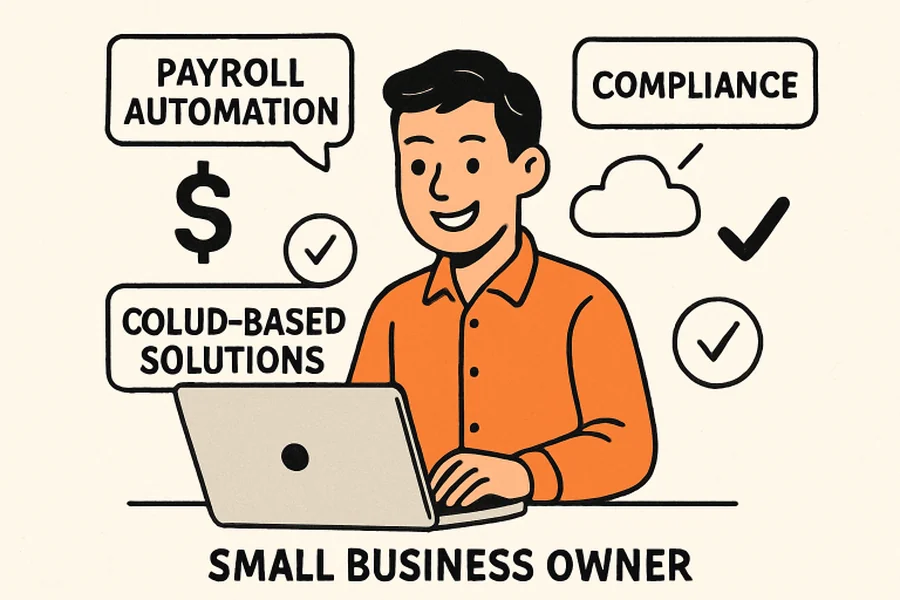
- Modern payroll software automates complex processes, reducing administrative burdens for small businesses.
- Artificial Intelligence (AI) and cloud-based solutions are enhancing payroll accuracy and compliance.
- Integrated payroll systems offer real-time data access, improving decision-making and employee satisfaction.
Table of Contents
- Introduction
- Automation and Efficiency
- AI Integration
- Cloud-Based Solutions
- Real-Time Data Access
- Compliance and Security
- Employee Satisfaction
- Cost-Effectiveness
- Future Trends
Today’s small businesses face mounting pressure to optimize back-office operations without sacrificing compliance or employee experience. Payroll – a task notorious for its complexities and potential for error – is undergoing a digital transformation. Many business leaders now refer to a guide to the best payroll platforms to make data-driven decisions on software that streamlines their unique needs. As advanced technology becomes increasingly accessible, modern payroll solutions are no longer a nice-to-have but an operational necessity for small enterprises hoping to unlock growth and efficiency. This shift goes far beyond automating paychecks. Payroll platforms are harnessing artificial intelligence, cloud computing, and real-time data to solve old challenges in new ways, helping small businesses boost productivity, reduce errors, and improve employee retention. By adopting innovative solutions, small companies can ensure compliance, alleviate administrative burdens, and cultivate a workplace culture founded on trust and transparency.
Transformation in payroll is not limited to large corporations; small businesses are reaping the rewards of automation and integration. With flexible, cost-effective systems, companies of all sizes can now access technology that was once out of reach. As these trends intensify, business owners are prioritizing solutions to meet both regulatory requirements and employee expectations in a fiercely competitive environment. Alongside operational benefits, payroll software is opening doors to better data insights, helping leaders make informed choices that drive performance. With rapid change rapidly reshaping this field, staying up to date on the latest tools and trends has proven vital for maintaining momentum and meeting the evolving needs of today’s workforce.
Automation and Efficiency
Manual payroll processing has long been a source of errors, delays, and administrative headaches. Modern payroll software eliminates repetitive manual tasks—like salary calculations, time tracking, and tax withholding—with automated workflows that require minimal oversight. Automation helps businesses speed up payroll cycles, reduce costly mistakes, and enable HR or small business owners to redirect their focus toward growth and core operations.
AI Integration
AI is rapidly revolutionizing payroll management by applying intelligence to data analysis and decision support. Payroll platforms now incorporate AI-powered features, including predictive analytics, anomaly detection, and intelligent reporting. Systems can identify potential errors—such as outliers in reported hours or deductions—and alert administrators before mistakes are recorded. The capabilities don’t end there: predictive models can forecast seasonal labor costs or estimate the impact of regulatory changes. With 66% of AI-adopting small businesses seeing productivity gains, and 72% expressing optimism for the future, the promise of AI in payroll extends to improved accuracy, lower costs, and a sharper competitive edge.
Cloud-Based Solutions
Cloud payroll has become a game-changer in terms of flexibility and scalability. Unlike legacy desktop systems, cloud platforms enable centralized access to data from any device, empowering remote and hybrid teams. Businesses can manage multi-location workforces, centralize reports, and ensure consistent payroll practices regardless of their location. Cloud software also delivers seamless updates that automatically reflect the latest compliance standards, freeing companies from the burden of manual patching and data migration. With cyberattacks and data breaches on the rise, cloud providers invest in robust encryption and backups, adding a critical layer of protection for sensitive employee data.
Real-Time Data Access
Real-time payroll insights are critical for proactive decision-making. Integrated systems sync time tracking, benefits enrollment, and expense reports to provide live dashboards. Leaders can monitor KPIs such as labor costs, overtime, and tax liabilities in real-time, identifying trends or issues as they emerge. This immediacy enables managers to optimize staffing, track budgets more accurately, and respond promptly to changing business needs. Leveraging KPIs via modern tools directly impacts strategy and success rates for small businesses.
Compliance and Security
Payroll compliance is a complex and challenging area for small businesses, given the ever-evolving nature of tax laws, labor regulations, and wage requirements. Payroll platforms simplify this process by automatically updating tax tables and filing requirements in response to federal, state, and local changes. Comprehensive reporting modules enable the simple generation of end-of-year documents and audit trails. Enhanced security is equally essential; industry-leading payroll providers use advanced encryption, two-factor authentication, and continuous monitoring to safeguard employee privacy and prevent unauthorized access.
Employee Satisfaction
Employees expect efficient, accurate, and accessible payroll services as part of a positive workplace experience. Payroll software meets this demand by providing employee self-service portals, which enable staff to view pay stubs, update direct deposit details, and access essential forms without requiring HR intervention. These features eliminate confusion and foster transparency, helping to build workplace trust. Research shows that satisfied employees are more engaged and productive, which can significantly reduce costly turnover rates and strengthen company culture.
Cost-Effectiveness
Though payroll technology is an investment, its bottom-line impact quickly becomes apparent. Automation trims administrative hours and minimizes penalties related to compliance errors, providing substantial ROI. With a variety of subscription models and tiered pricing, small companies can select solutions scaled to their needs and anticipated growth. Many providers offer integration with existing HR tools or accounting software, eliminating costly duplication and further streamlining operations.
Future Trends
The payroll landscape continues to advance rapidly. Emerging trends include deeper AI integration for strategic forecasting, the adoption of blockchain for secure transaction verification and fraud reduction, and mobile-first platforms tailored for the growing remote workforce. Innovators in the payroll sector are also exploring data analytics tools that are directly linked to business intelligence dashboards. Staying ahead of these trends allows small businesses to sustain growth, adapt to workplace changes, and outpace competitors as the future of work unfolds.
The evolution of payroll technology is fundamentally reshaping the small business landscape. By embracing cutting-edge systems, leaders not only improve operations and compliance but also lay the groundwork for happier teams and future-ready businesses.